APA Style CENTRAL® Expert Tip: Citing Personal Communication

The purpose of a reference list in APA Style® is to acknowledge the work of previous scholars and provide a reliable way to locate that work.

What if you want to acknowledge a source that can’t be retrieved, such as a conversation, live lecture, or private letter?

This information should be treated as a personal communication, which is cited in the body of the paper but not included in the reference list.

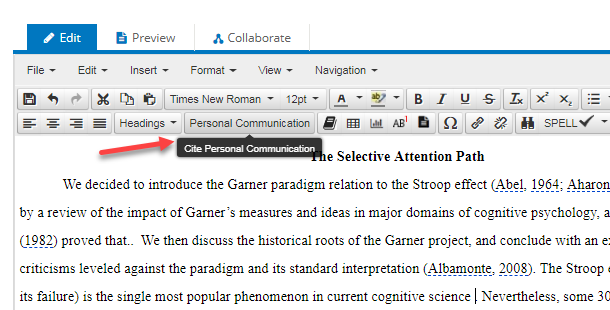
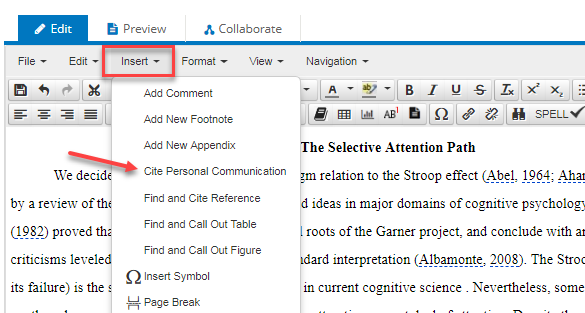
You can cite a personal communication in your APA Style CENTRAL® paper by clicking the Personal Communication button in the editor menu or selecting from the Insert menu.


Once you provide the information needed—the individual’s name and the date of communication—the citation will appear in the paper body, including the words personal communication.
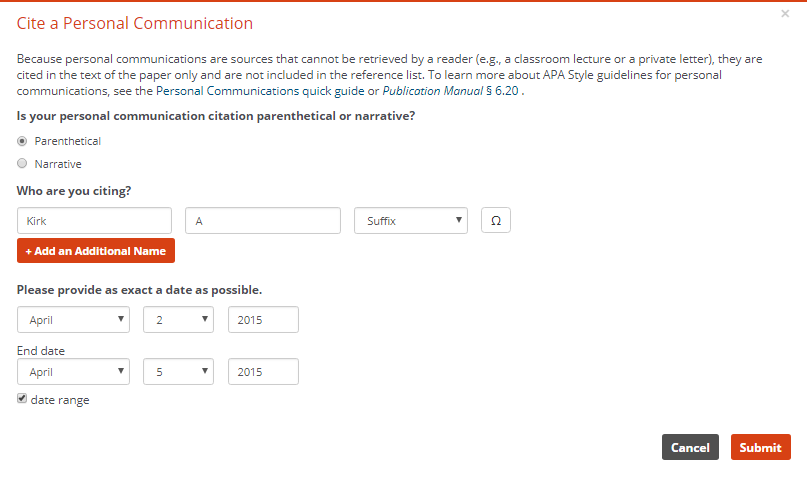

 

Because personal communications can’t be retrieved by a reader, they are not included in the reference listIn APA Style CENTRAL, you can edit personal communication in the body of your paper, as you would any other text.


Please note:

  • Research interviews with participants are NOT considered personal communication; they are qualitative data and should be reported in a way that respects confidentiality. For more, see this post on the APA Style blog.
  • If the communication was shared with you personally but is now retrievable—the conversation is on a discussion board, the lecture can be found on YouTube or a podcast, or the letter is published in a periodical or book—you can treat it as any other reference (i.e., create a reference to that retrievable source).


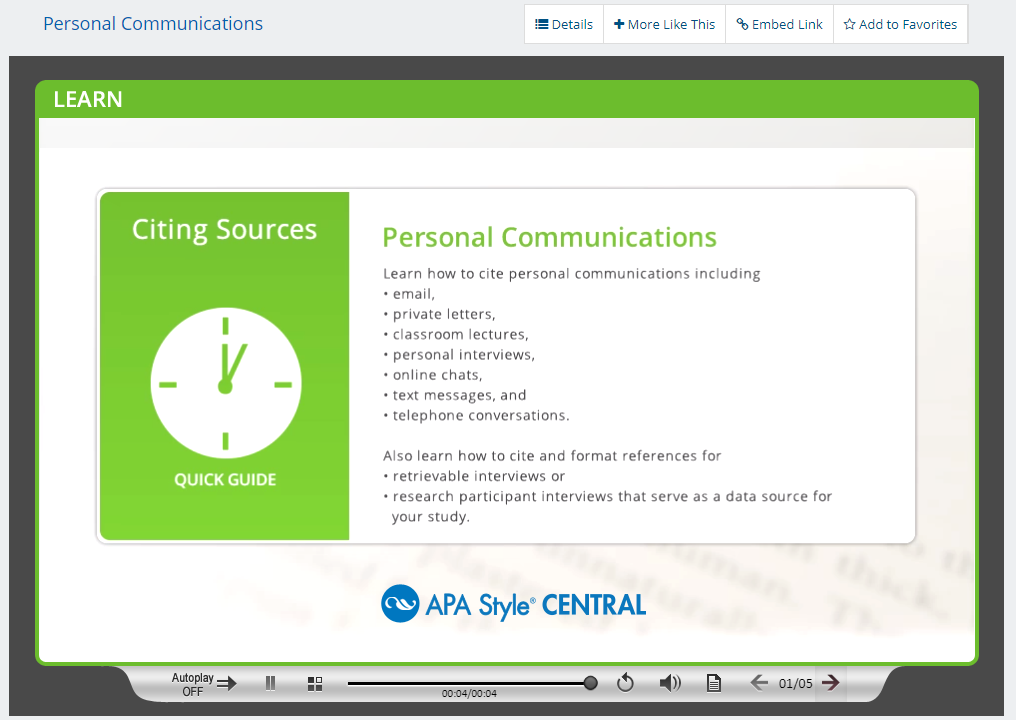
For more information, see the APA Style CENTRAL quick guide “Personal Communications.”
Related Resources

APA Style Blog: What Belongs in the Reference List?

APA Style Blog: How to Cite a Class in APA Style

APA Style Blog: Let’s Talk About Research Participants
APA Style CENTRAL® Update: Improved Searching of Learning Center Content

The search function in the Learning Center has been improved! APA Style CENTRAL recently added features and updated tools to help with your research and writing in APA Style (also see our previous blog posts for details about spell-check and appendices and citing within paper elements).

After discovering that users were not easily finding relevant quick guides, sample references, and other content when searching the Learning Center, we updated the behind-the-scenes indexing for the learning objects to make them easier to find.

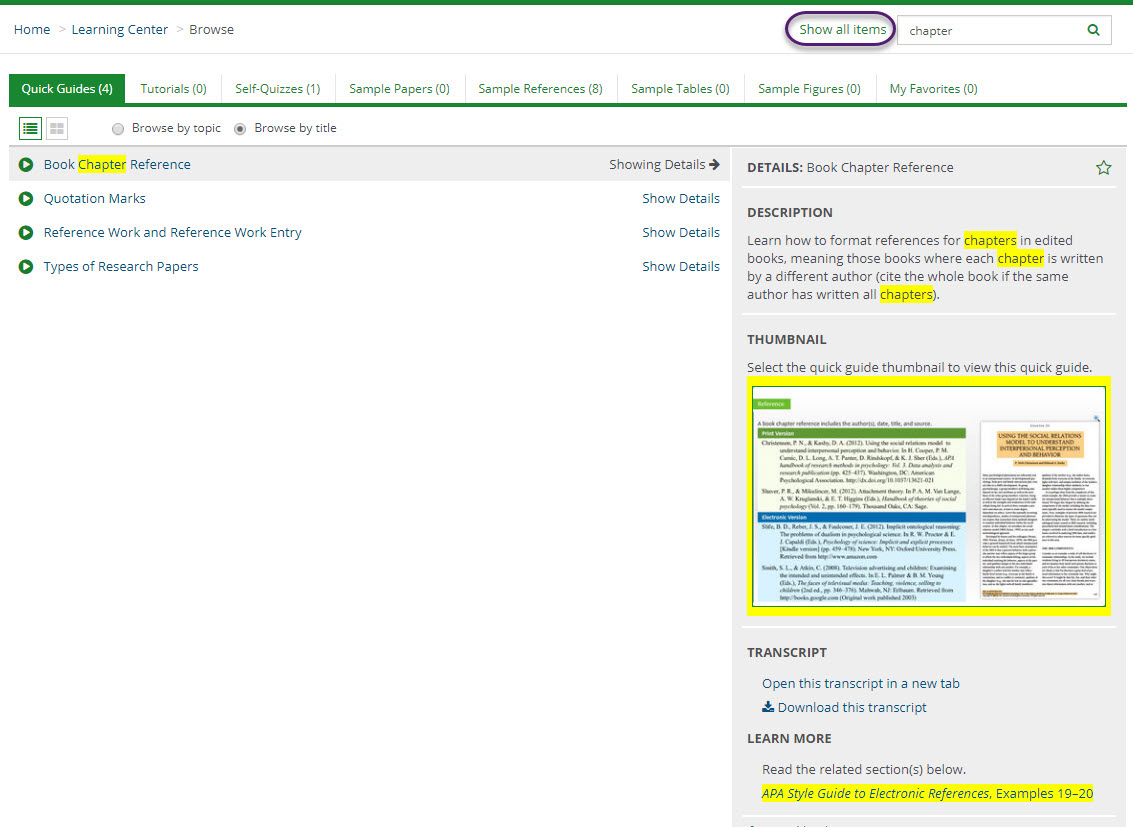
You can now enter a variety of search terms without having to exactly match the terms used in the learning object’s description or title. All of the relevant parts of the search results are highlighted in yellow. If the answer can be found in both the learning object and an associated PDF in the LEARN MORE section, both will be highlighted.

For example: Searching for “chapter” results in highlighting of the quick guide title “Book Chapter Reference”; all instances of the word “chapter” in this quick guide’s DESCRIPTION heading; the video preview box in the THUMBNAIL section; and the text in the LEARN MORE section, “APA Style Guide to Electronic References, Examples 19-20″.

""

Another notable example: Searching for “Bible” will display the “Citing References in Text” quick guide, with highlighting of the relevant section of the Publication Manual of the American Psychological Association that addresses the citation of classical works.

Let us know! If you search the Learning Center but don’t find what you’re looking for, please email us! Tell us what search term(s) you used and what you expected to find so that we can update the content indexing to improve the search functionality.

Search tip: To quickly clear your search terms from the search box or view all learning objects again, use the “Show all items” link to the left of the search box (see screenshot above).

Related resources:

Questions? Want to see more features added to APA Style CENTRAL?
Let us know!  support@apastylecentral.org

Introducing Emily Shotick

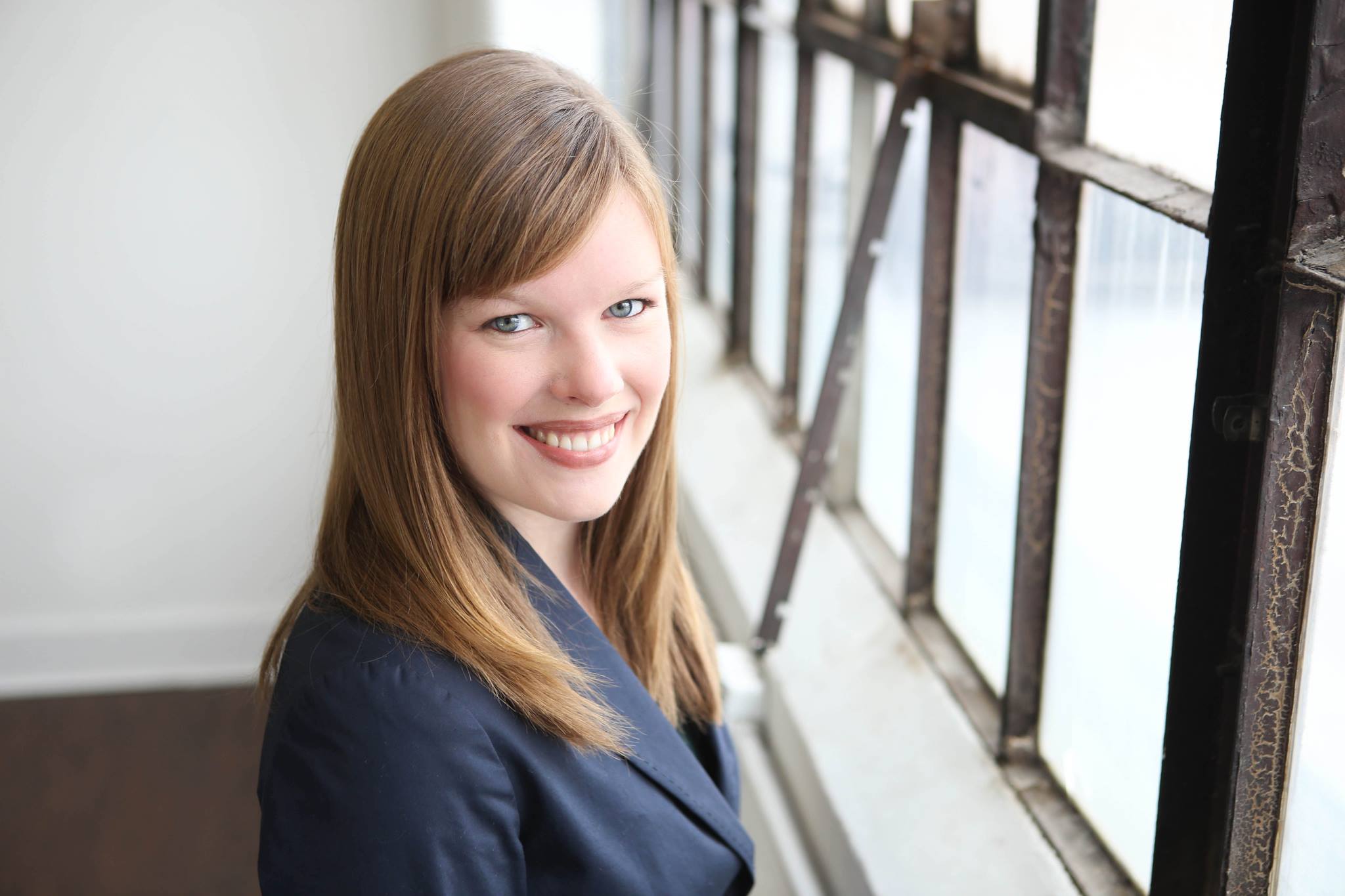
The APA Databases & Electronic Resources Customer Relations team is growing! Emily Shotick, MSLIS, joined the team in March 2018 as an APA Style Training and Support Specialist.

Prior to joining APA, she was the Regional Librarian at Chamberlain University in Indianapolis, where she provided APA Style instruction as well as other reference and information services. In addition, she worked as a librarian at The Chef’s Academy in Morrisville, NC, which also included providing training in APA Style®.

Emily has an MS in Library and Information Science from Indiana University, and a BA in English from Miami University.


Emily’s role at APA will focus mainly on training for APA Style CENTRAL®, and she will join the other training specialists in providing webinars, creating print and online training materials, and conducting in-person training sessions. Her experience working with students, faculty, staff, and librarians and APA Style will ensure training materials are as useful and relevant as possible.

Webinar Alert: PsycINFO Sessions for Students & Faculty – April 11-13, 2018

Our next series of PsycINFO® webinars for students and faculty will run on April 11, 12, 13 from 11 – 11:30 a.m. EST. The sessions may be attended separately, but we encourage those who are interested to take all three, so we offer them on consecutive days:

We will provide information relevant to all search platforms including APA PsycNET®, EBSCOhost, Ovid, and ProQuest. The platform demonstrated will be based on the needs of the attendees of each session. For more information on this series, including full descriptions, please visit our databases webinar training for students and faculty web page.

These webinars are an ideal way for students to get a refresher on PsycINFO if they have had a previous training session. Please help us spread the word to interested students and faculty!

New Features in APA Style CENTRAL®’s Writing Center – Citing Within Paper Elements

APA Style CENTRAL recently added and updated tools to help with your research and writing in APA Style. See our previous blog post for details about spell-check and appendices.

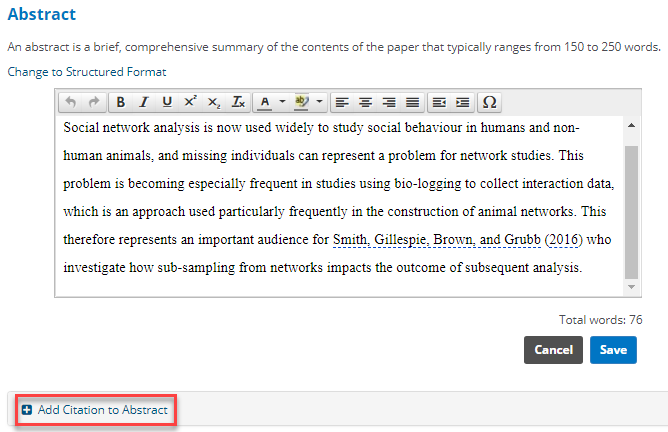
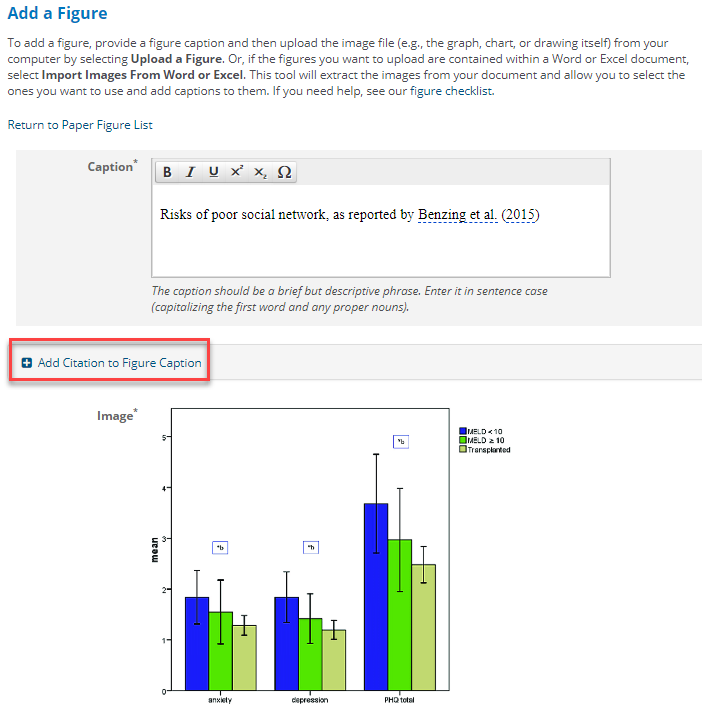
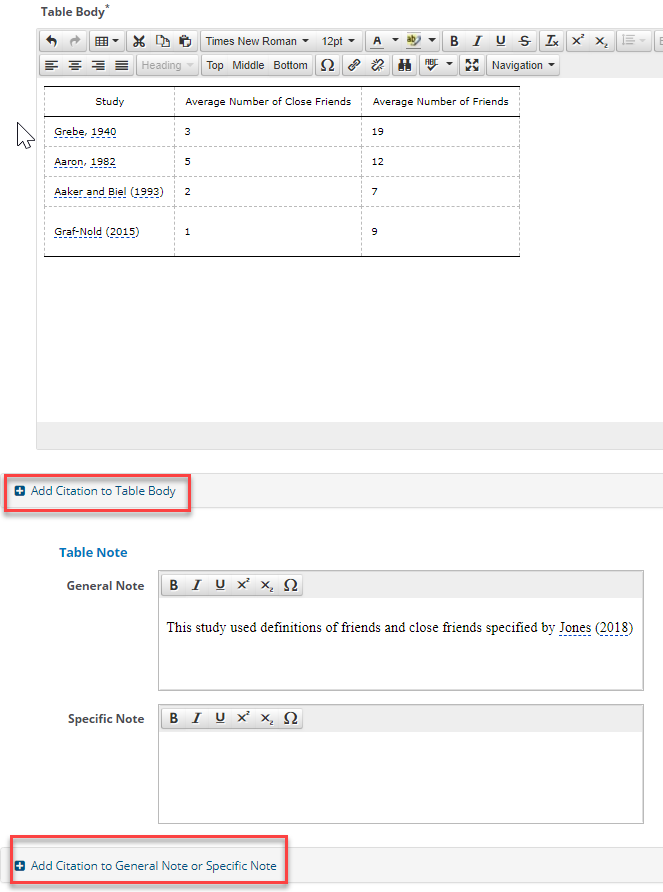
You can now cite references in abstracts, figure captions, table bodies, and table captions, in the same way you cite references in the body of the paper.

Why cite within these parts of the paper?

  • If your research is a reply or follow-up to previously published work, you’d usually cite that work in the abstract.

  • If your figure summarizes data from another published work, you’ll want to credit that researcher in the figure caption

  • If you’re doing a literature review or meta-analysis and want to summarize the results of several previous studies in a table, you’ll want to cite those studies in the table body.
  • If your table includes results you found using a concept or a survey developed by another researcher, you’ll want to credit them in your table caption.


To cite within a paper element, you can create a new reference, search for a reference in PsycINFO, or choose from My References.

Once the in-text citation is created, the reference is added to the Paper Reference List and marked as cited.


You can read the full list of platform updates on APA Style CENTRAL’s training and support page.


Related resources:
APA Style Blog: How to Cite Sources in a Table

APA Style CENTRAL Handout: Adding References to Papers

Tutorial: Inserting References


Questions?
Want to see more features added to APA Style CENTRAL?
Let us know!  support@apastylecentral.org